Why should I pay for this? What does it do that the Yarbo app doesn’t?
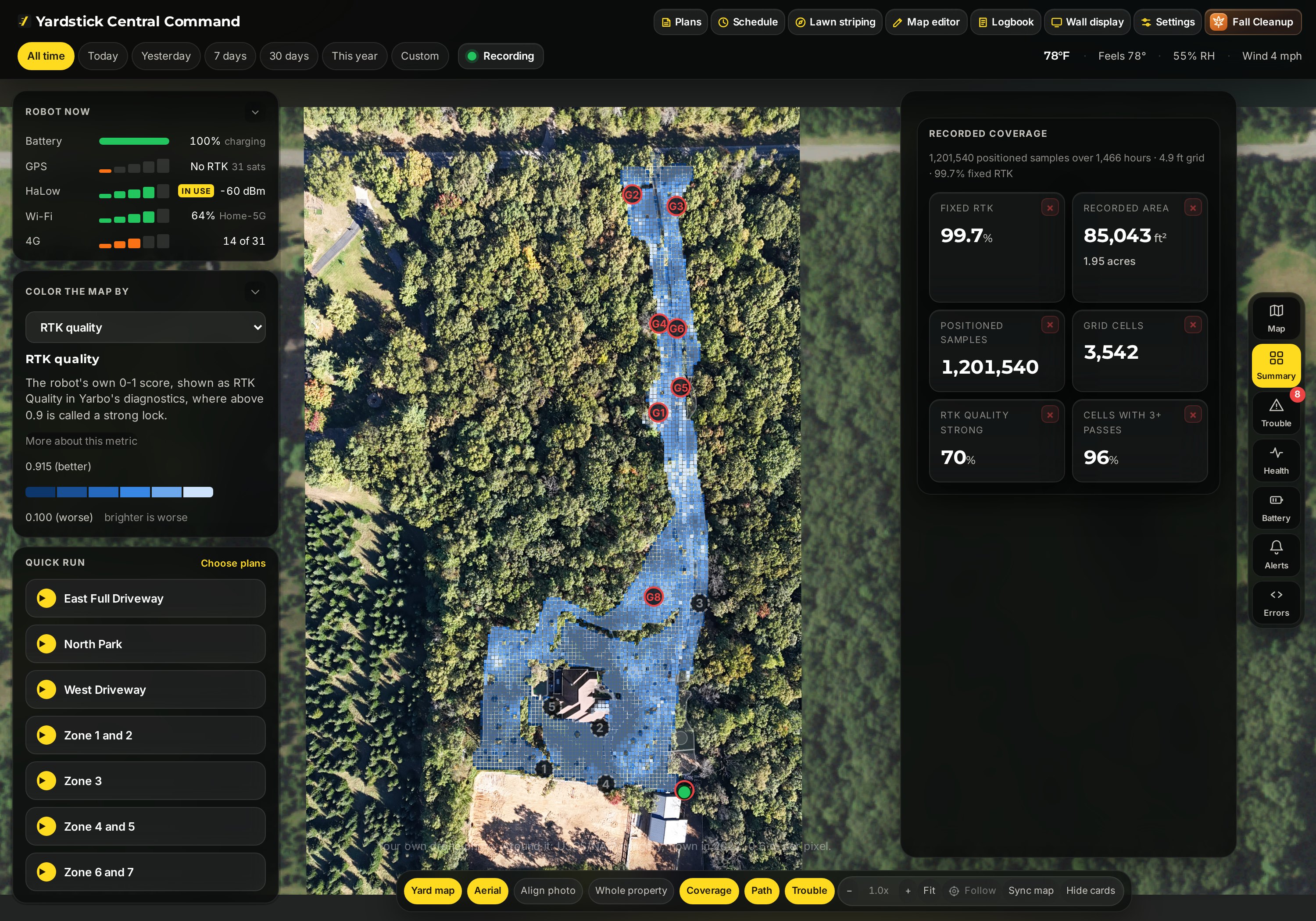
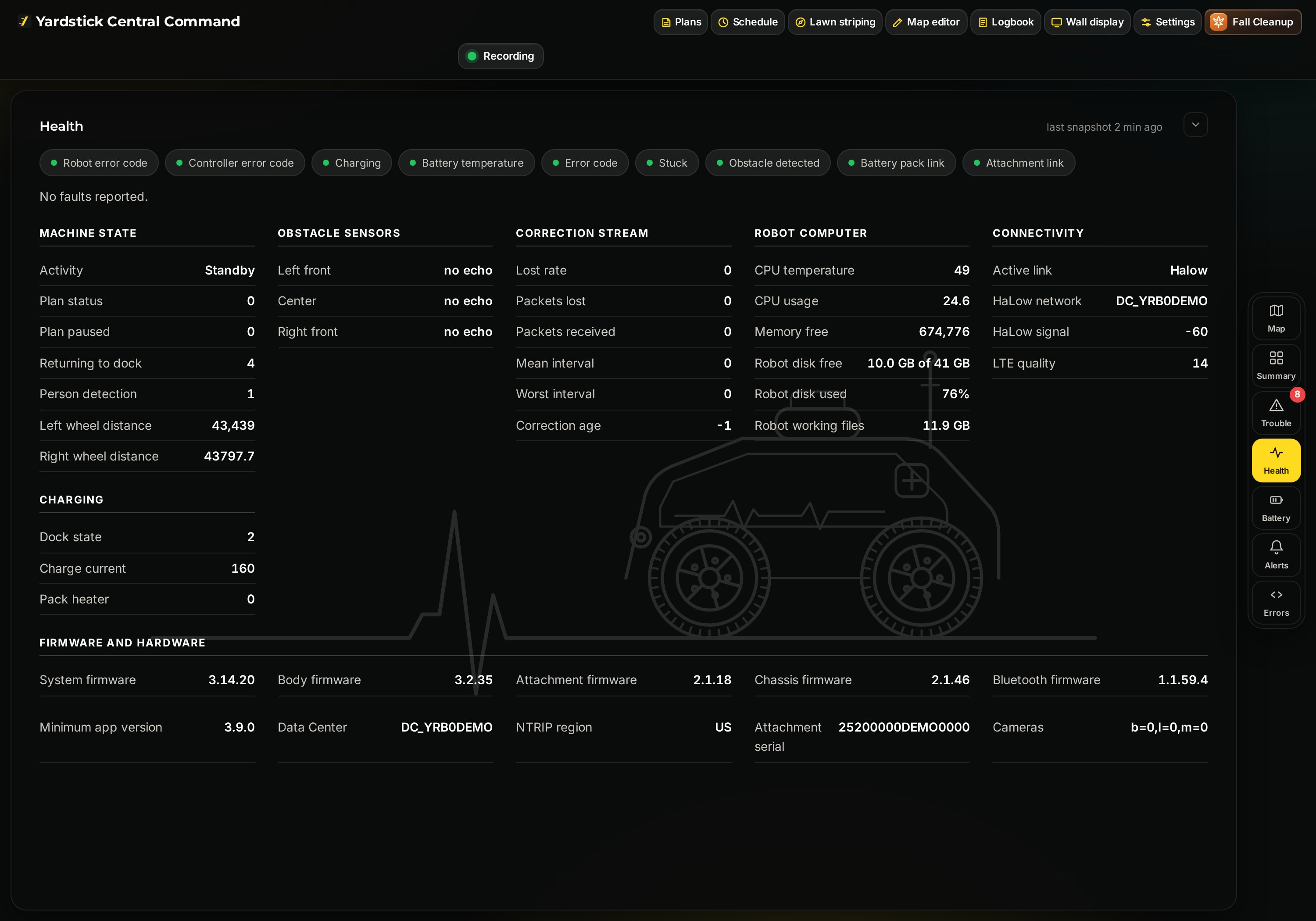
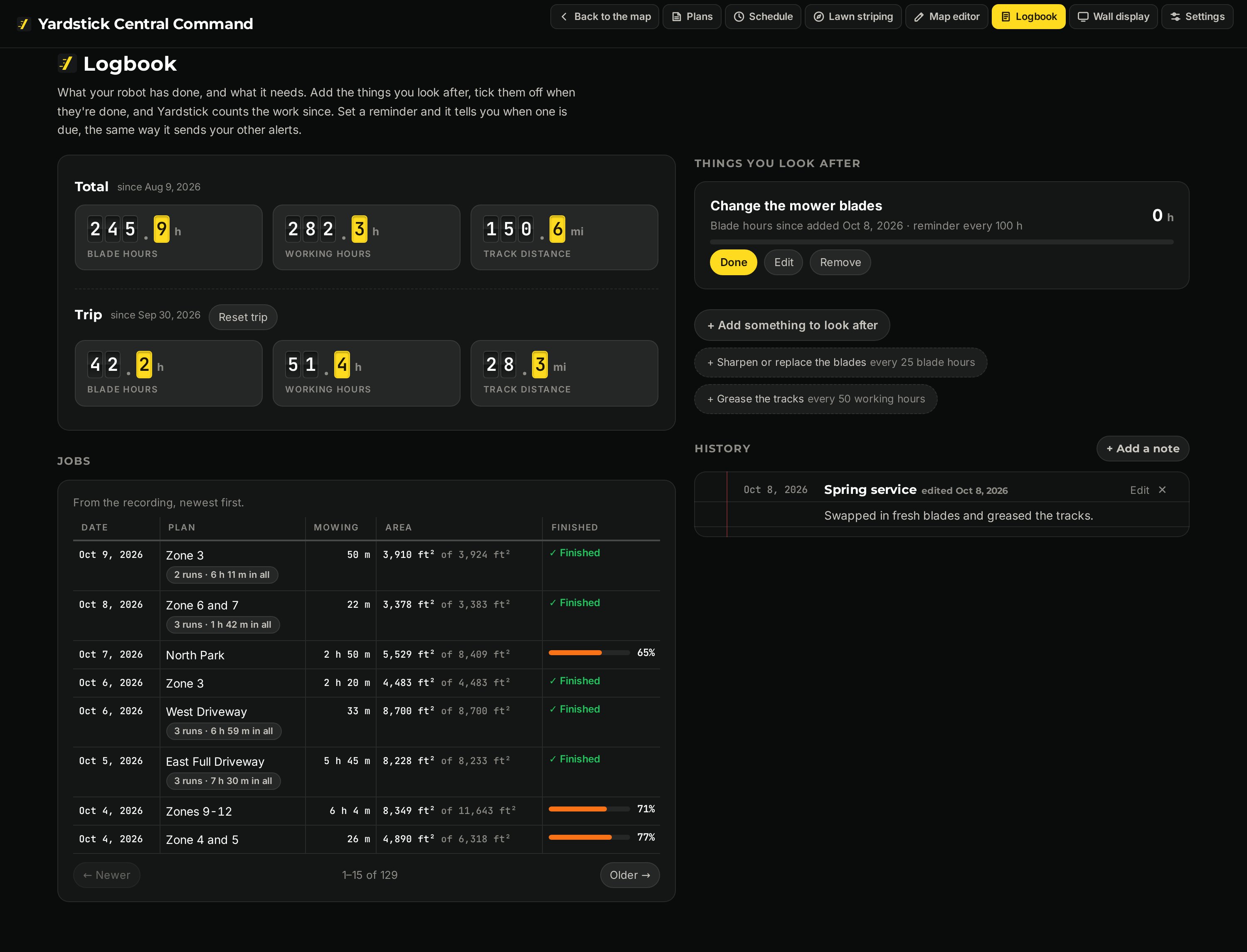
The Yarbo app shows you the moment; Yardstick remembers everything and turns it into something you can act on. It maps where your robot works well and where it struggles, warns you the instant something goes wrong, and gives you a full desktop map editor to fix problems in seconds. It runs on your own machine and plugs into Home Assistant. One price a year turns your robot from a black box into something you can see, tune and trust.
My robot struggles in the same spot every time. Can Yardstick show me why?
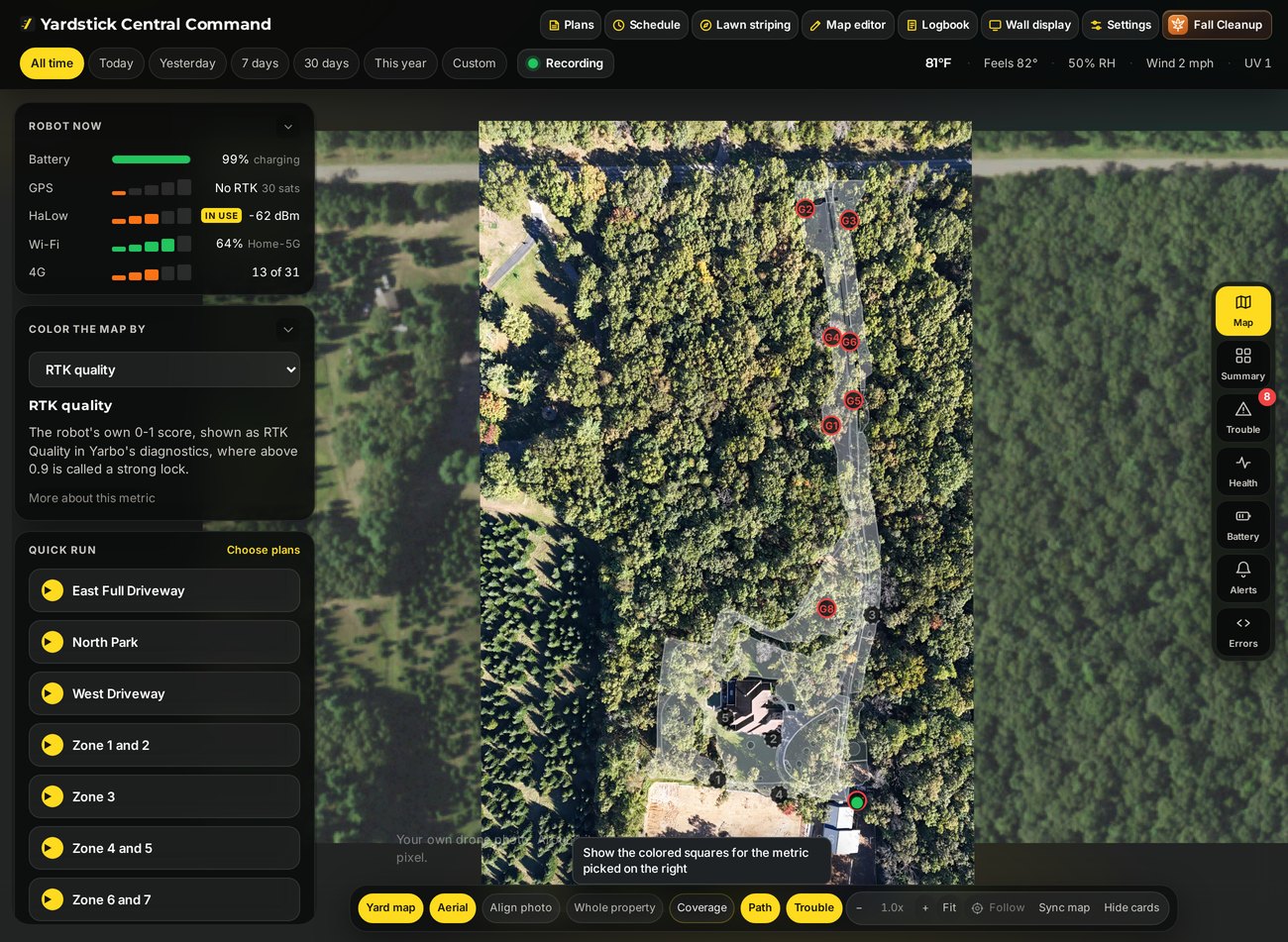
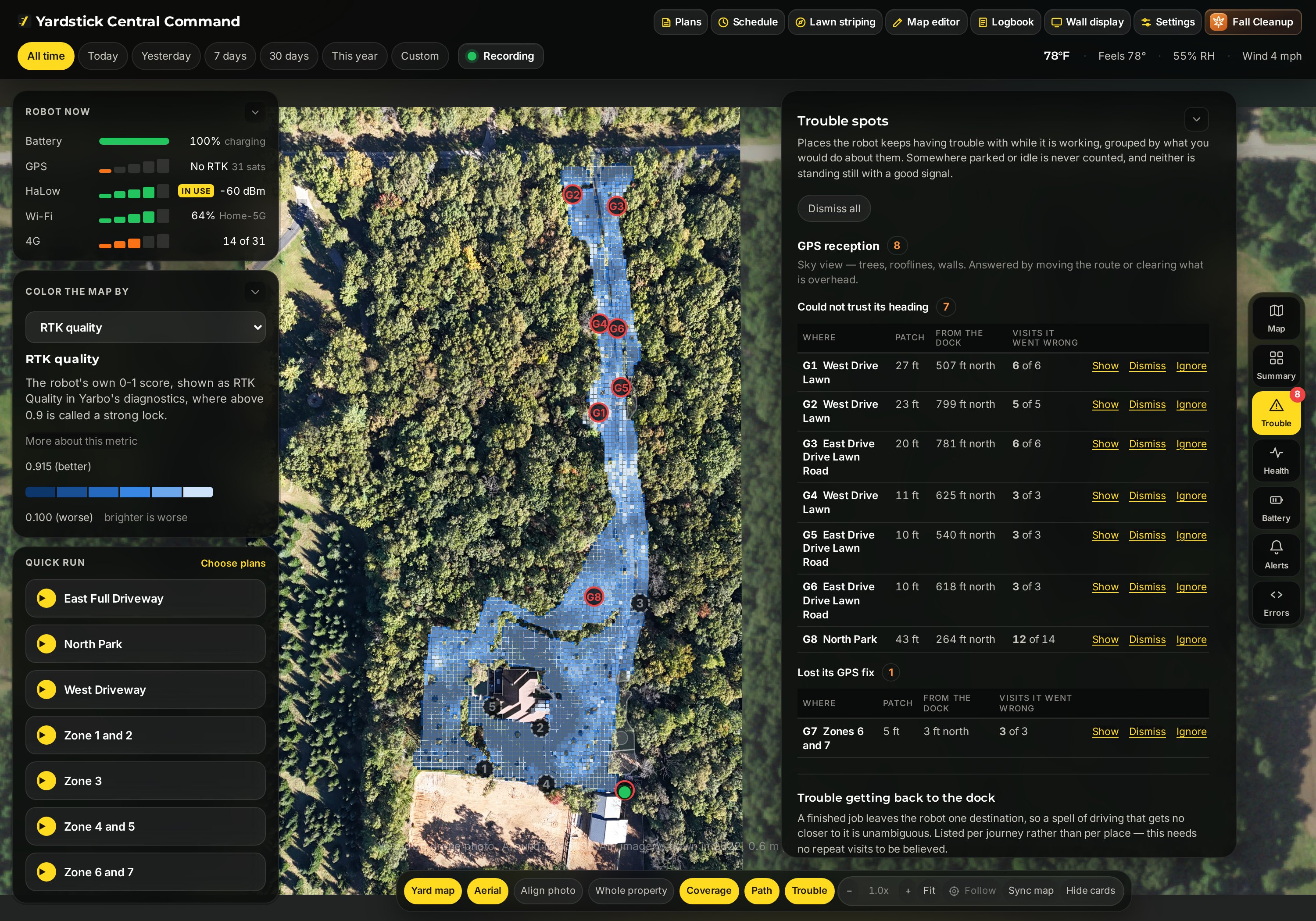
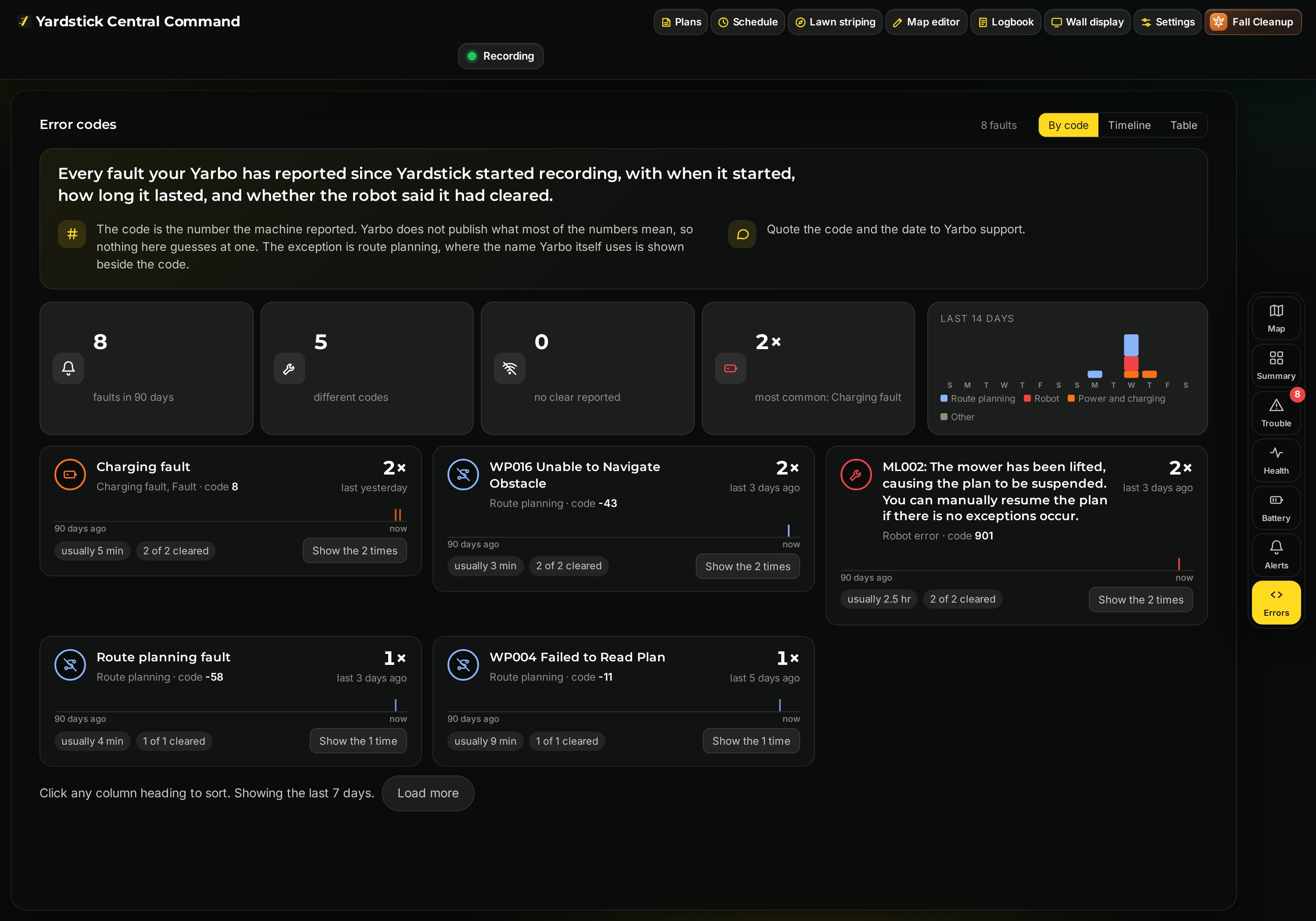
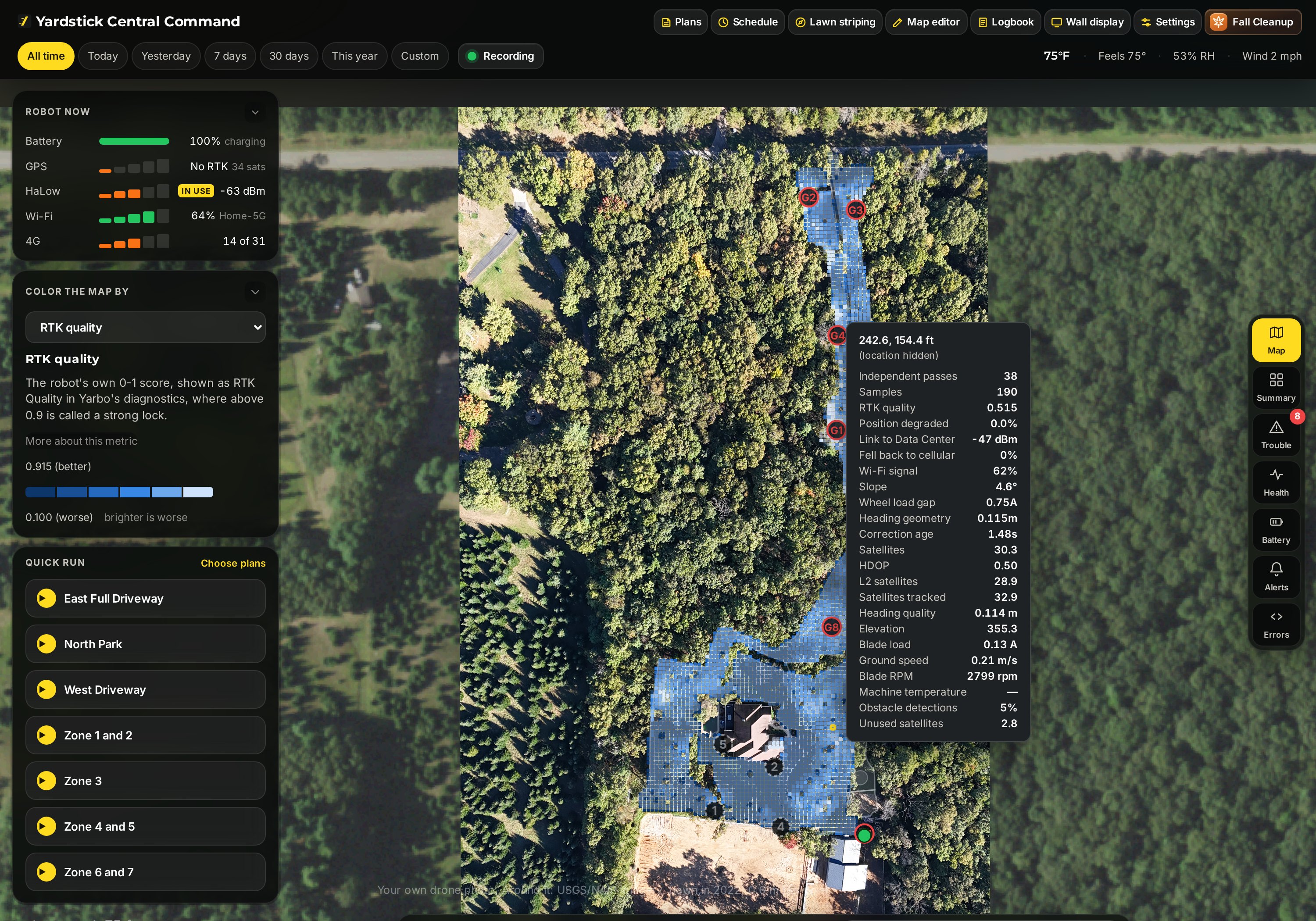
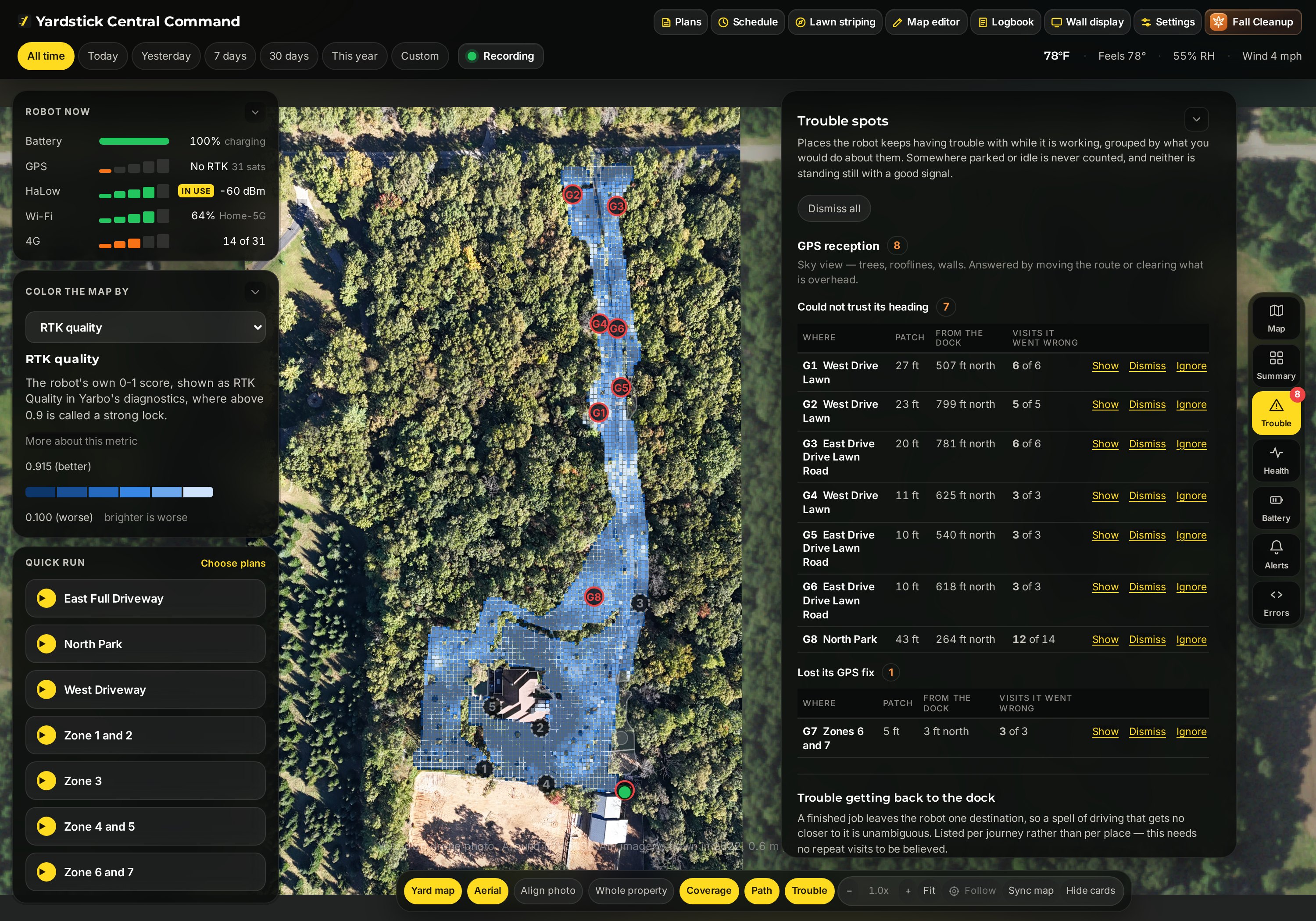
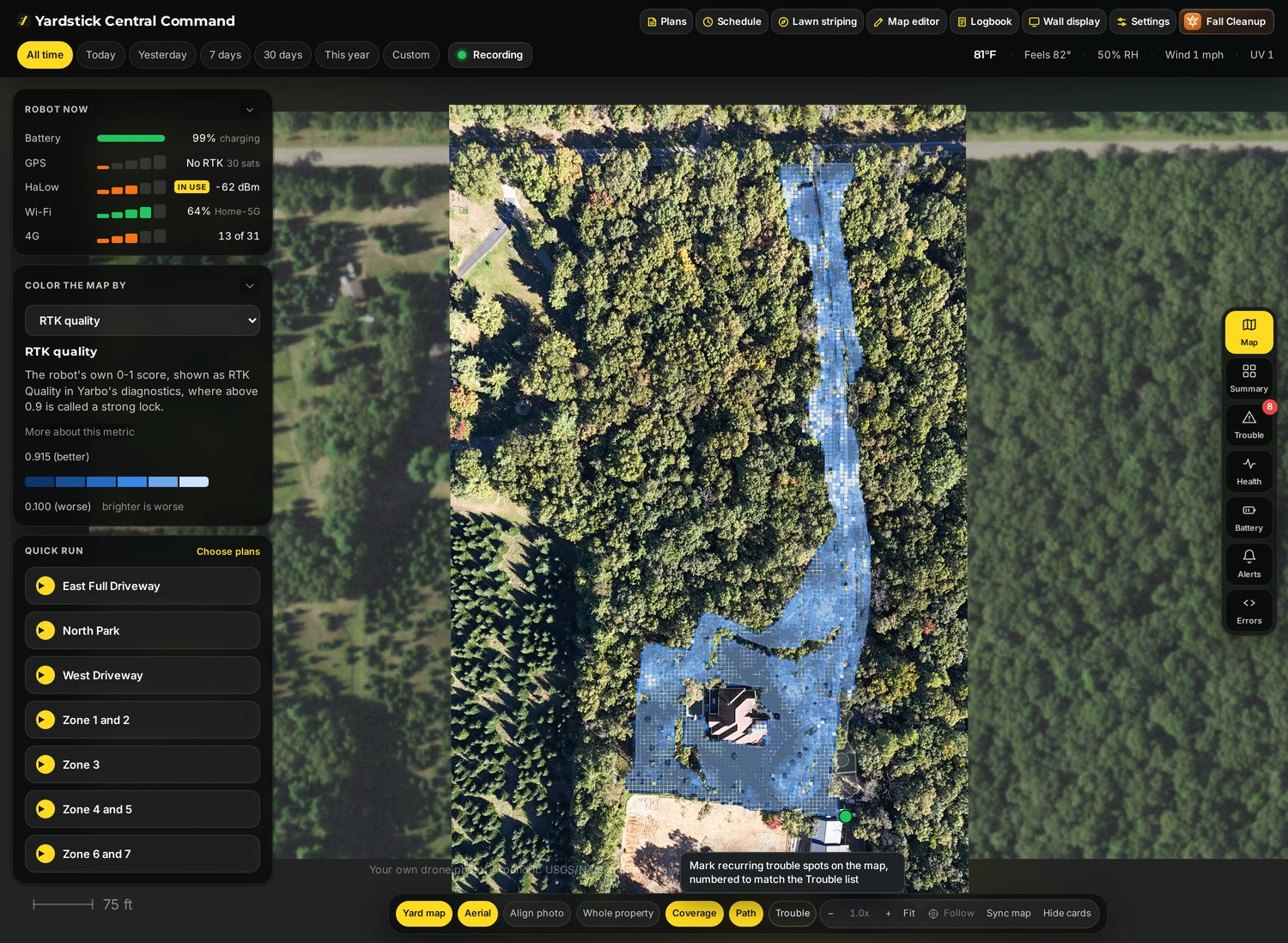
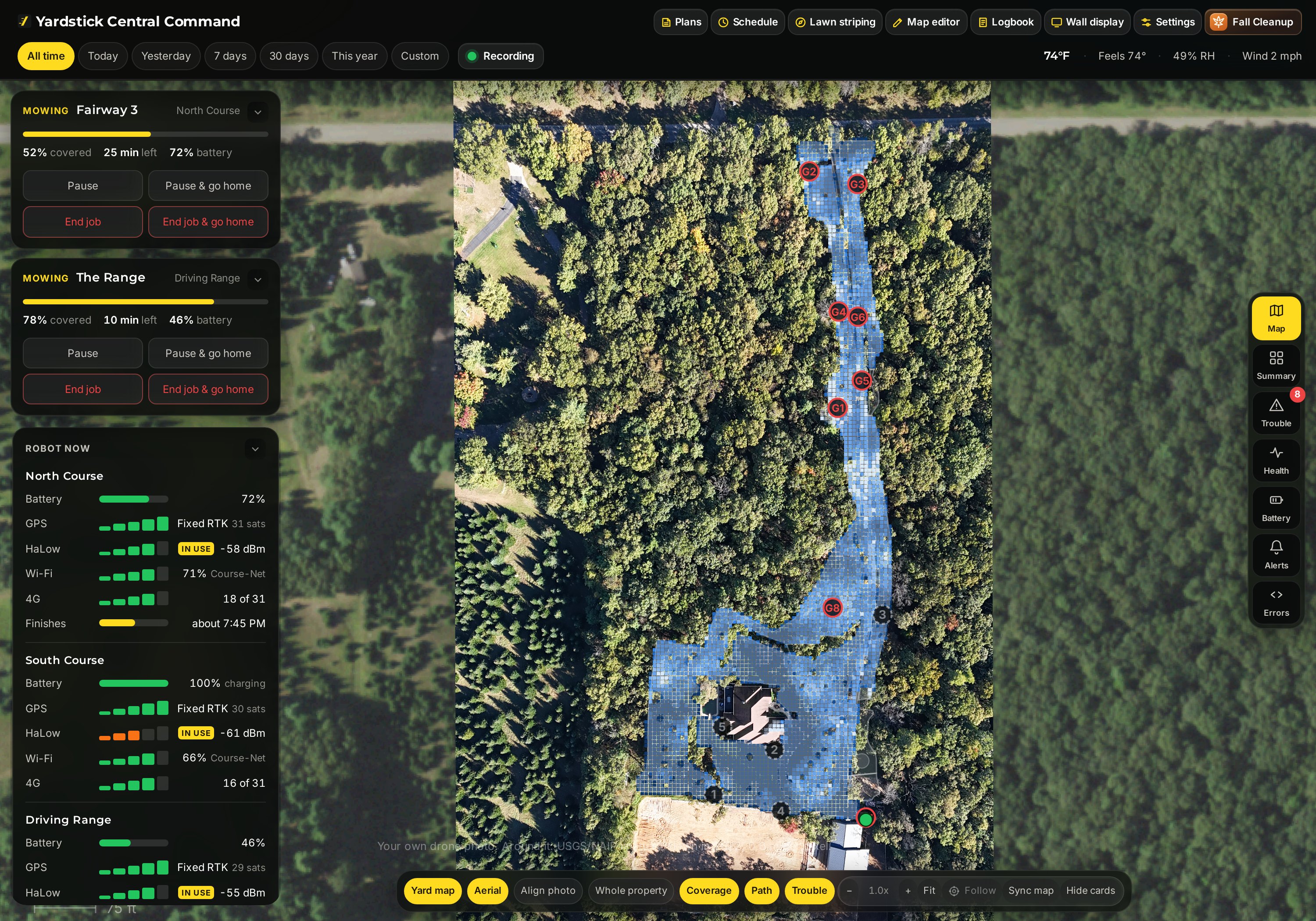
Yes, and this is the heart of it. Yardstick paints your whole yard as a coverage map across 21 data layers, so the trouble spot you keep noticing stops being a mystery. You can see the patch under a tree where the precise GPS fix drops and the robot falls back to a rougher signal, the corner where it loses its lock, the place it slows or reroutes. Problems the app never records, and that you would otherwise only guess at, become a picture you can point to and fix by trimming a branch, moving the antenna, or drawing a no-go zone.
Can I edit my map and fix bad routes from my computer?
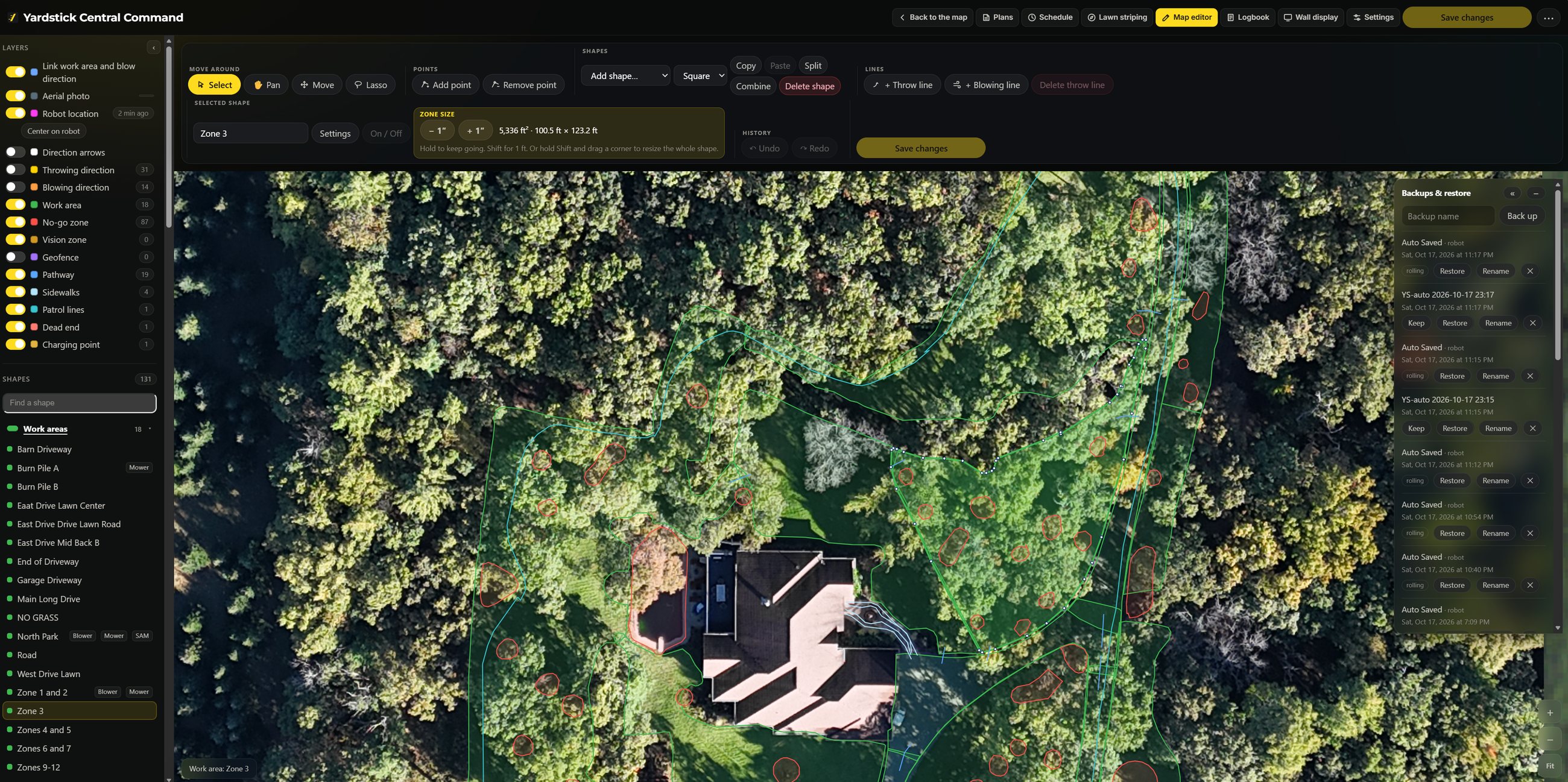
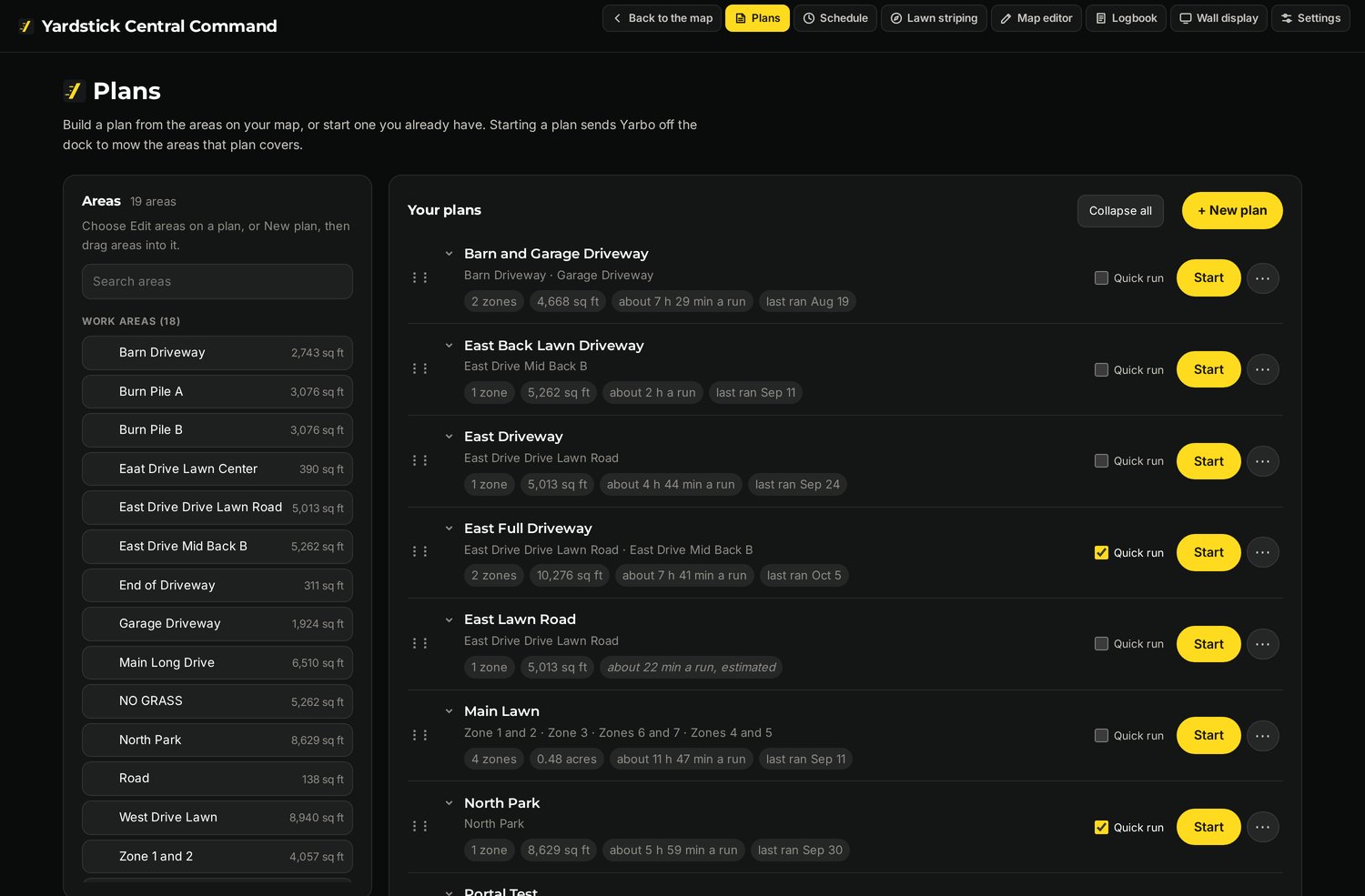
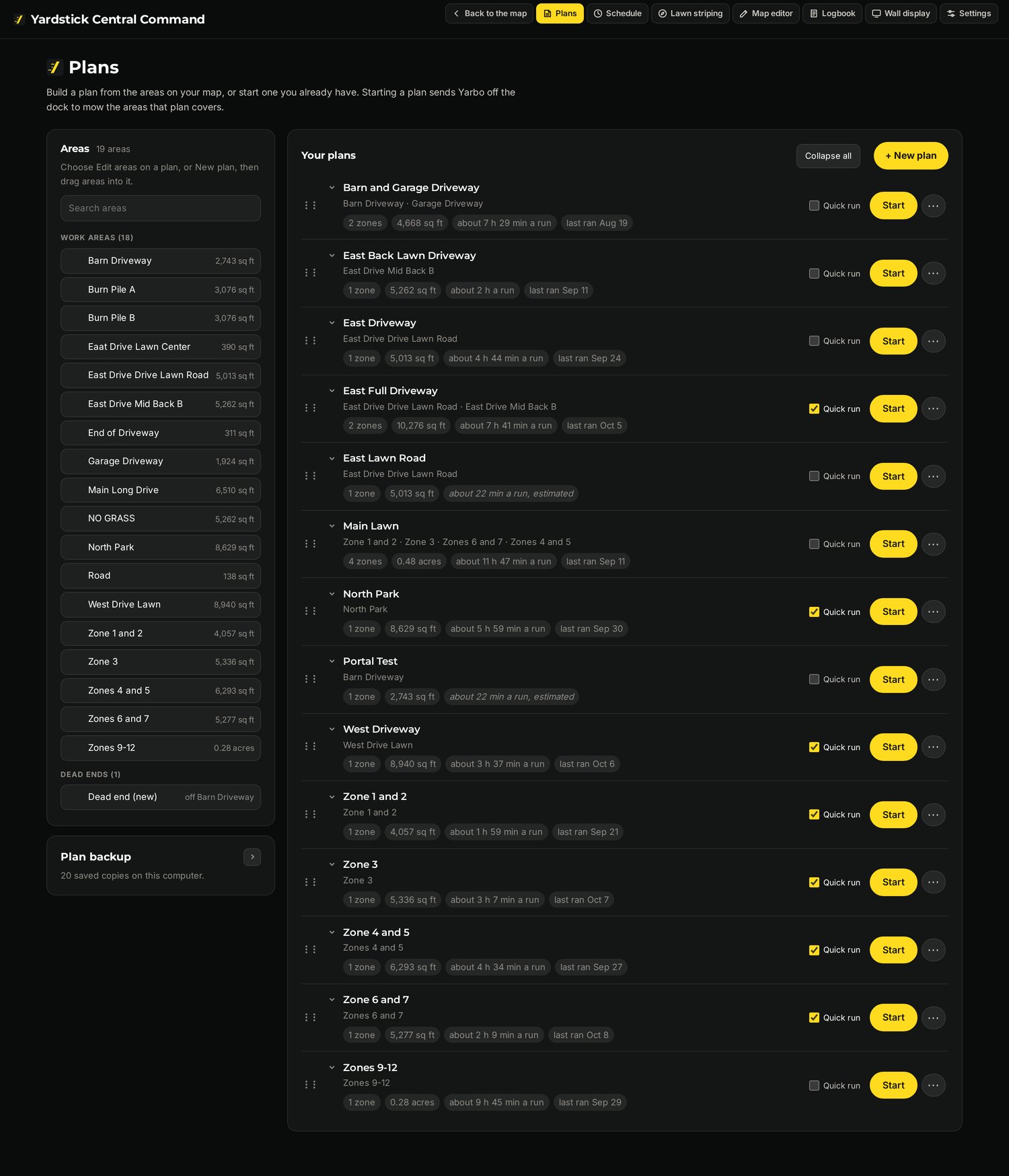
Yes. Yardstick has a full desktop map editor: draw and adjust work zones, no-go areas and travel paths, and set per-module options for the mower, leaf blower or SAM, all with a mouse on a real screen. The fiddly things that take forever on a phone, like nudging a boundary back off a flower bed or splitting one overgrown zone into two, take seconds.
Can I get my stripes to line up across the whole yard?
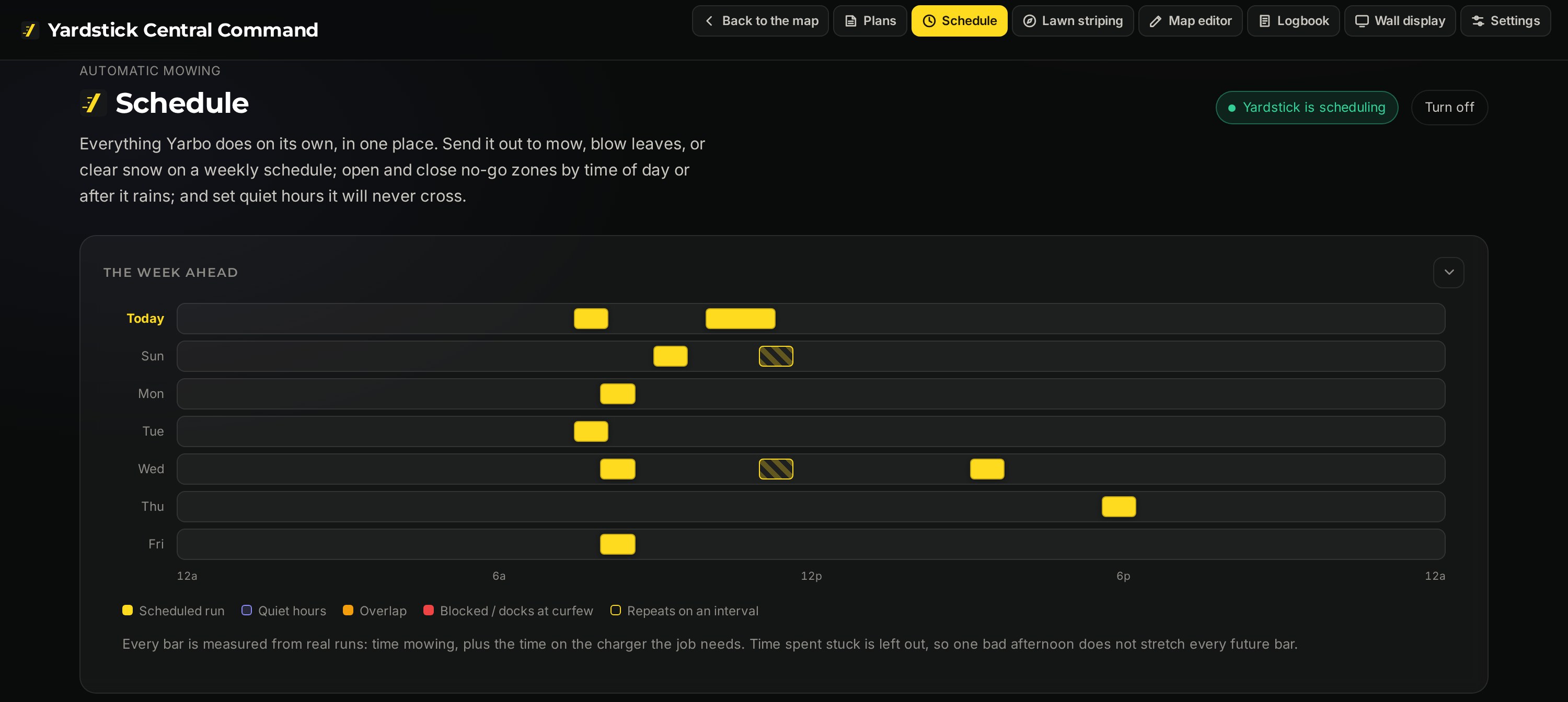
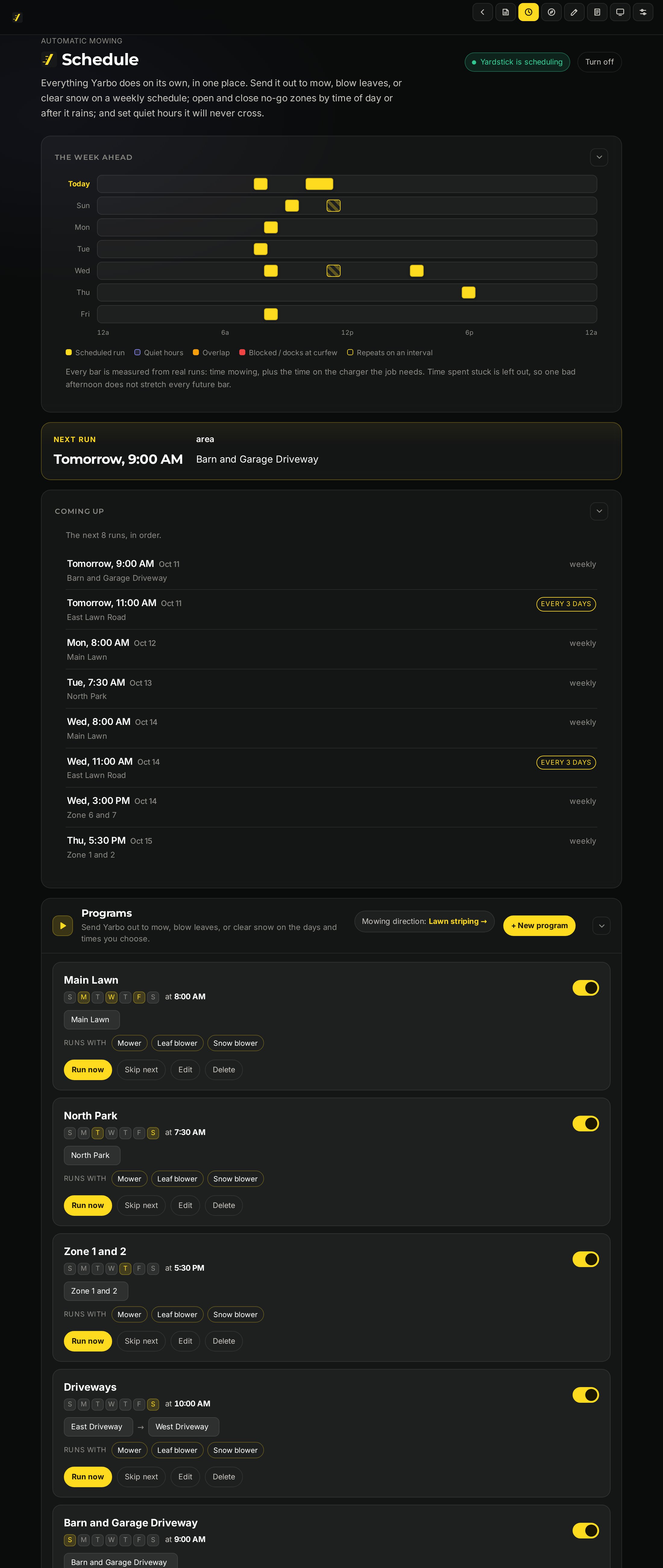
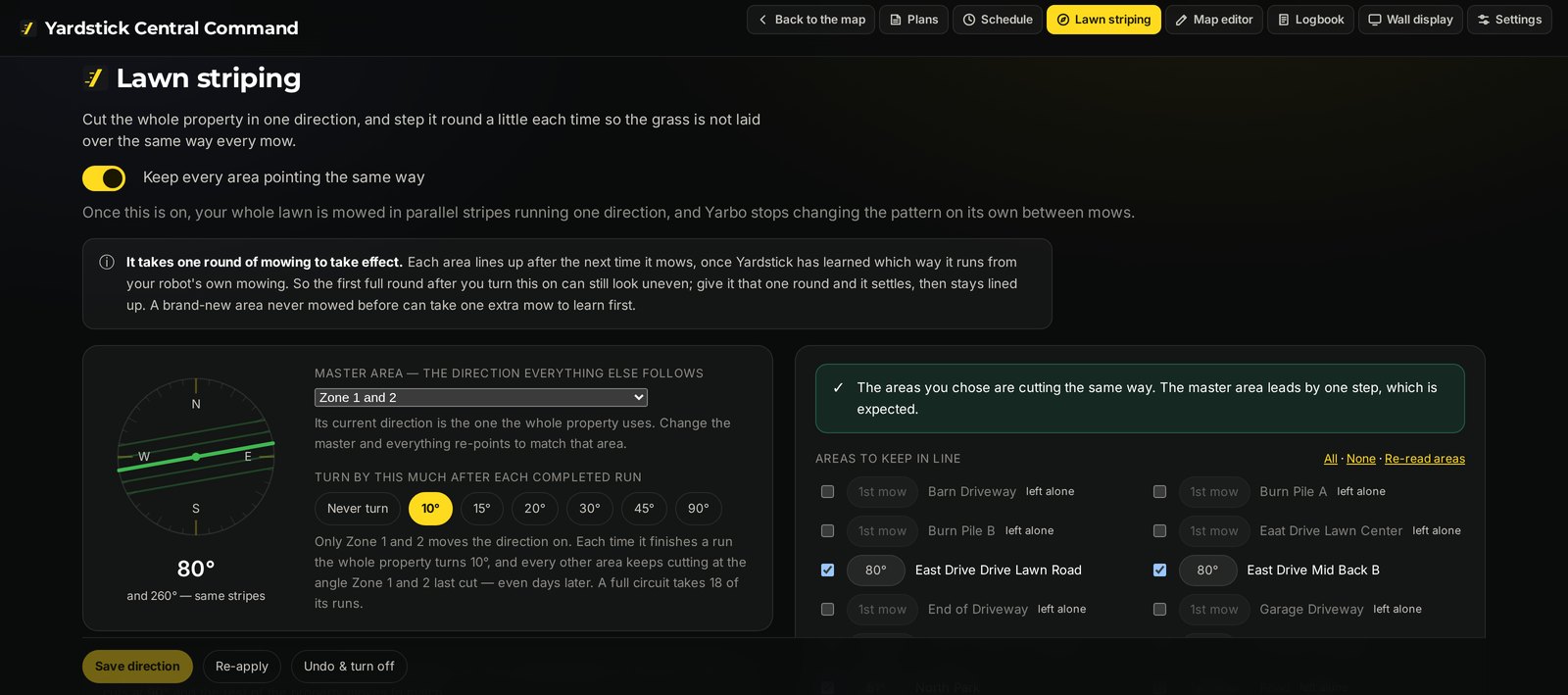
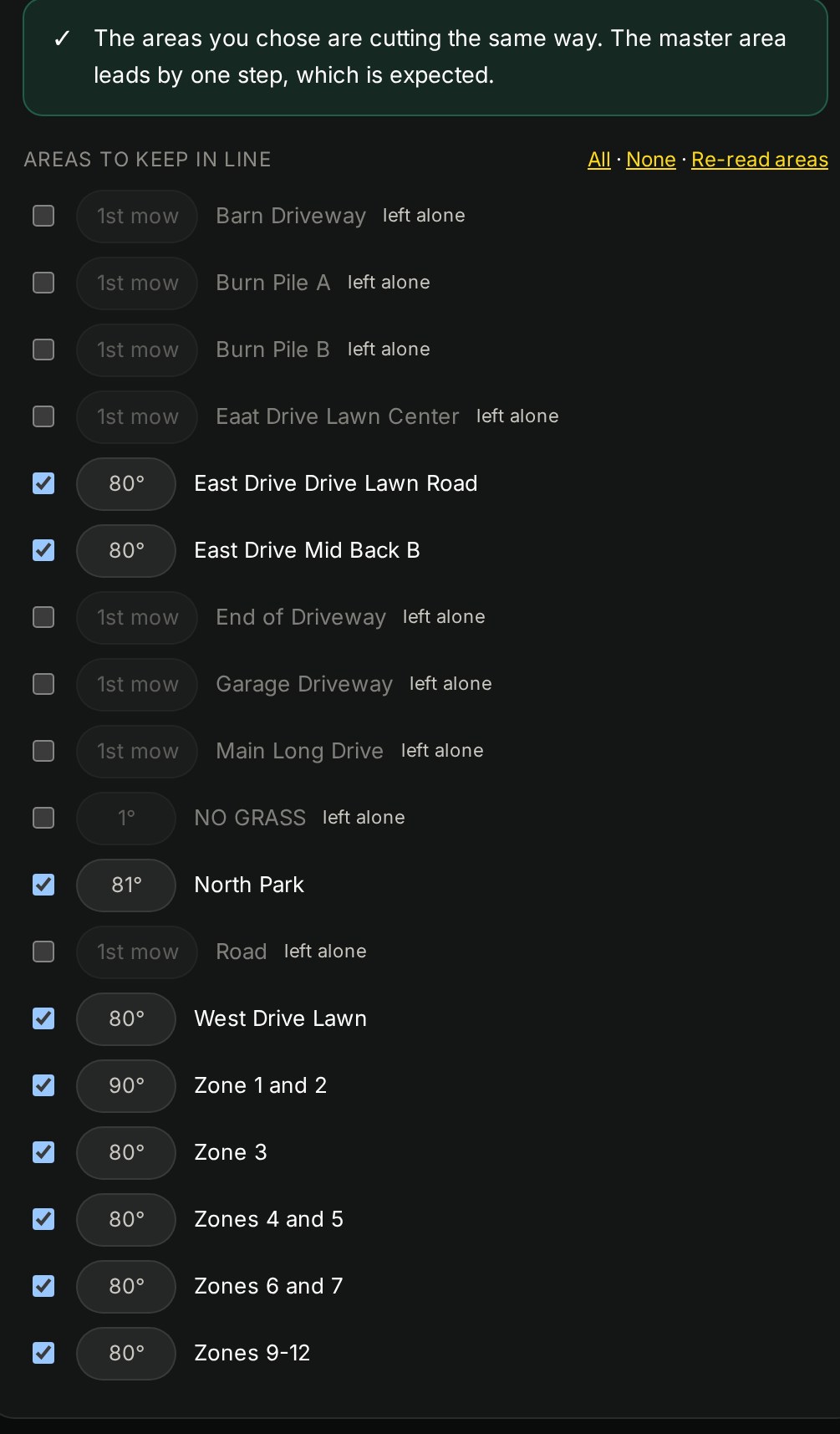
Yes, and this is one people ask for by name. Yarbo turns its mowing pattern a few degrees after each run so the grass is not pressed the same way twice, but it counts separately for every area, so over a season your zones drift out of step and you can see a seam wherever two of them meet. Yardstick sets one direction for the whole property and steps every area round together, by however much you choose. It is set in Yardstick, not in the map editor, and applies on the next scheduled run.
Will it tell me when something goes wrong?
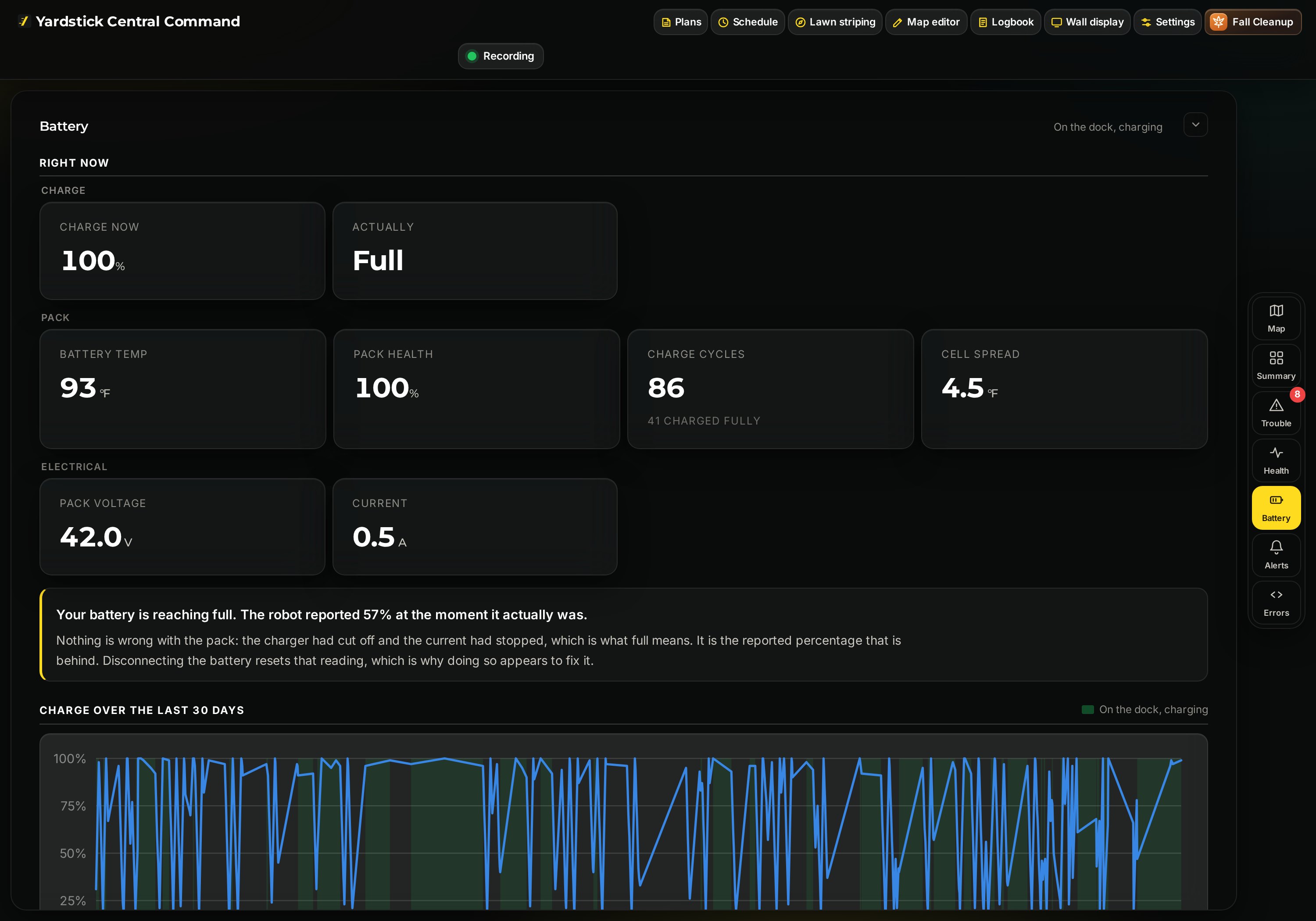
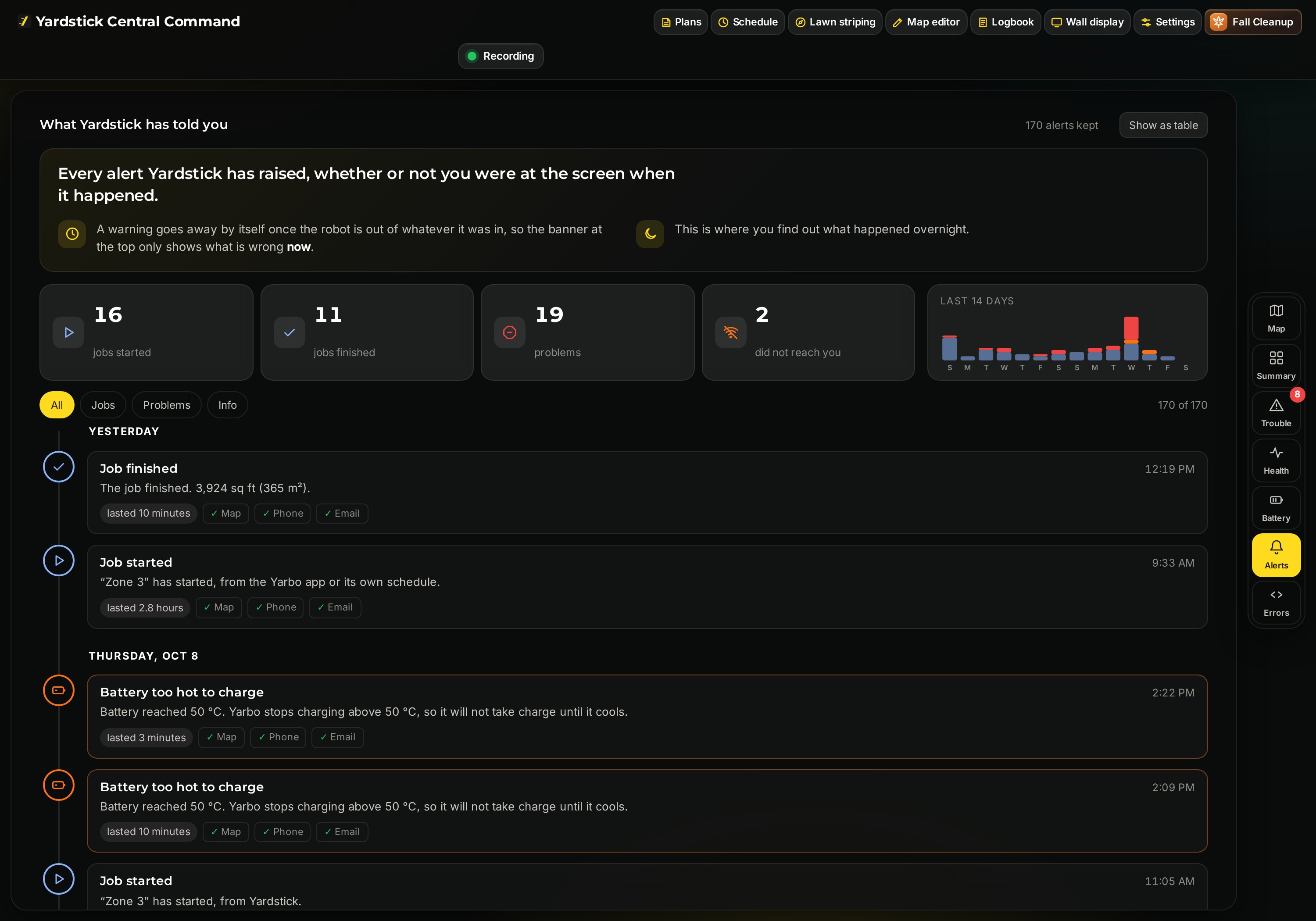
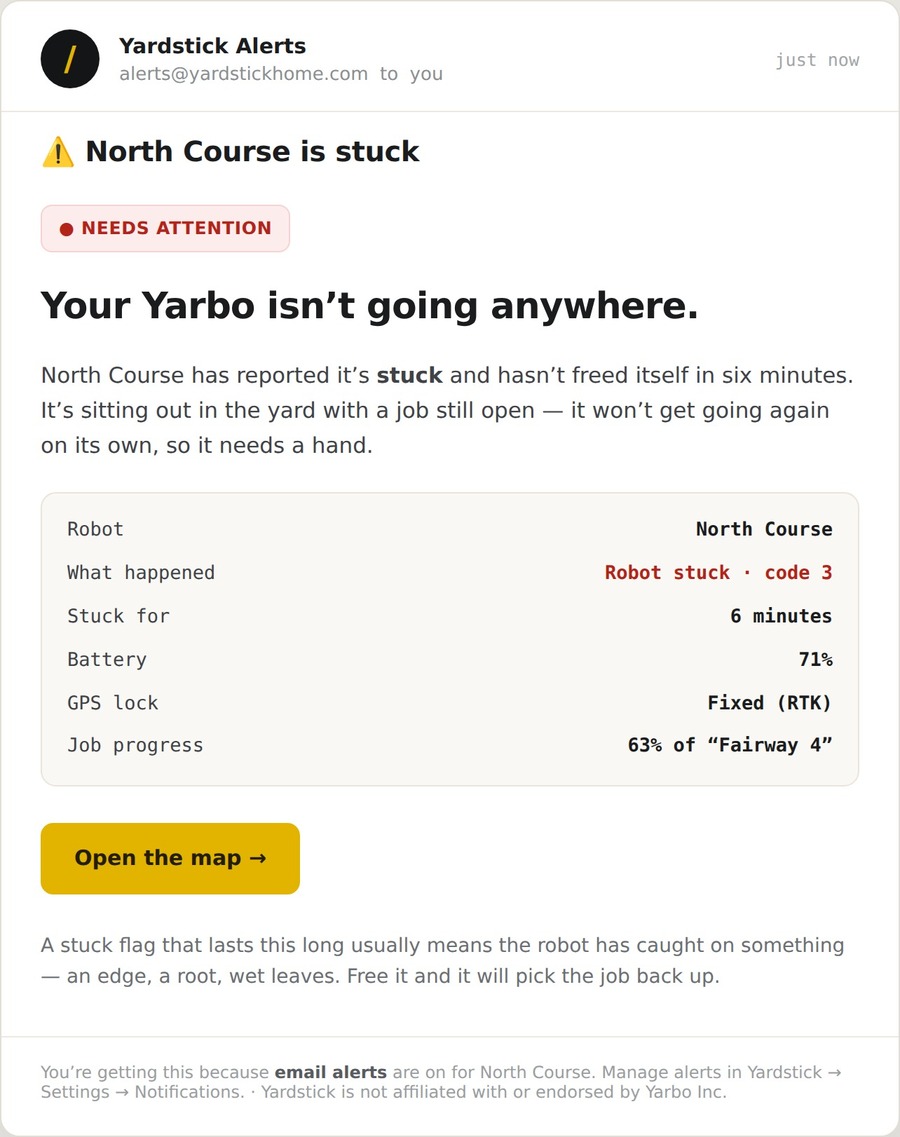
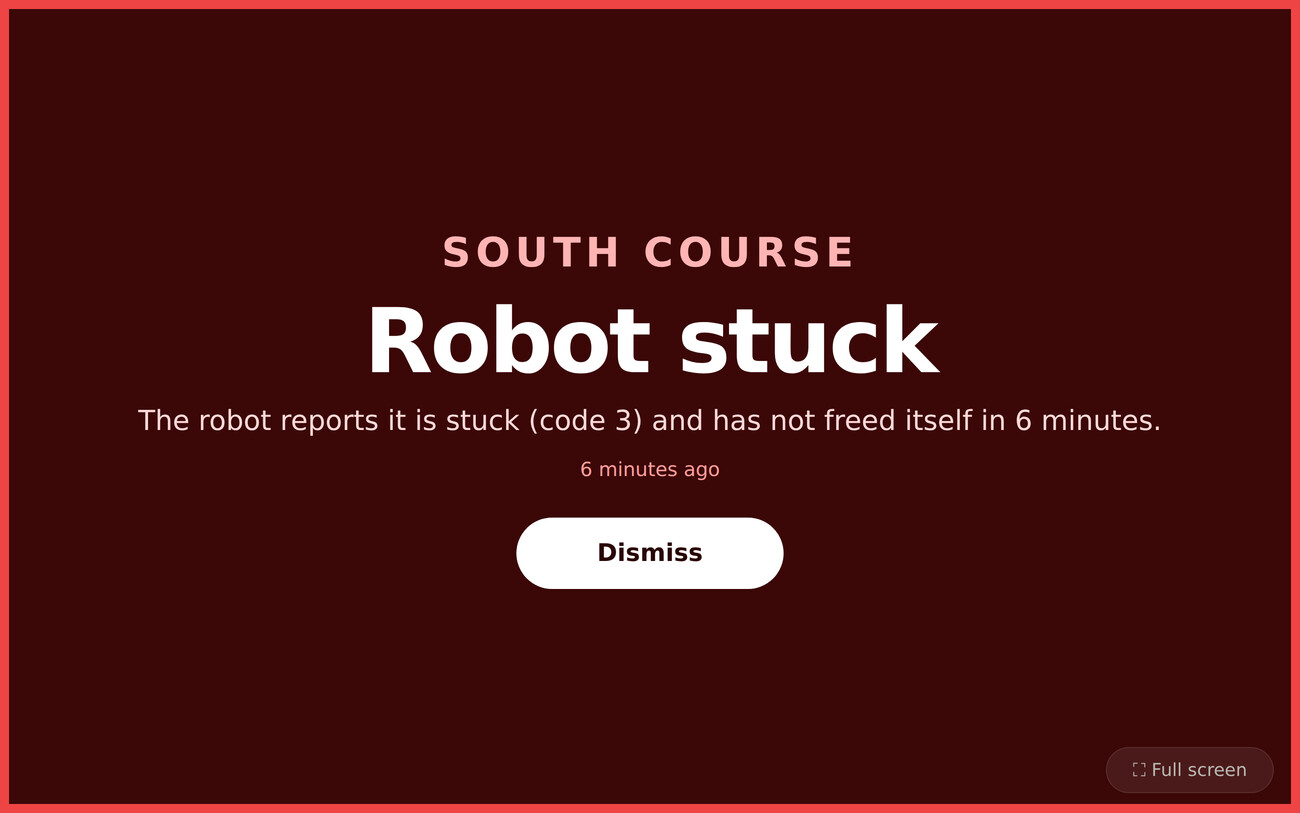
Yes, by on-screen banner, phone and email. Yardstick watches for the things you would otherwise find out about hours later: the robot stuck or stranded in the yard, unable to get back to its dock, a battery running low far from home, a lost GPS fix, or a firmware change. You hear about it when it happens, not when you walk outside.
Does it work with Home Assistant or my smart home?
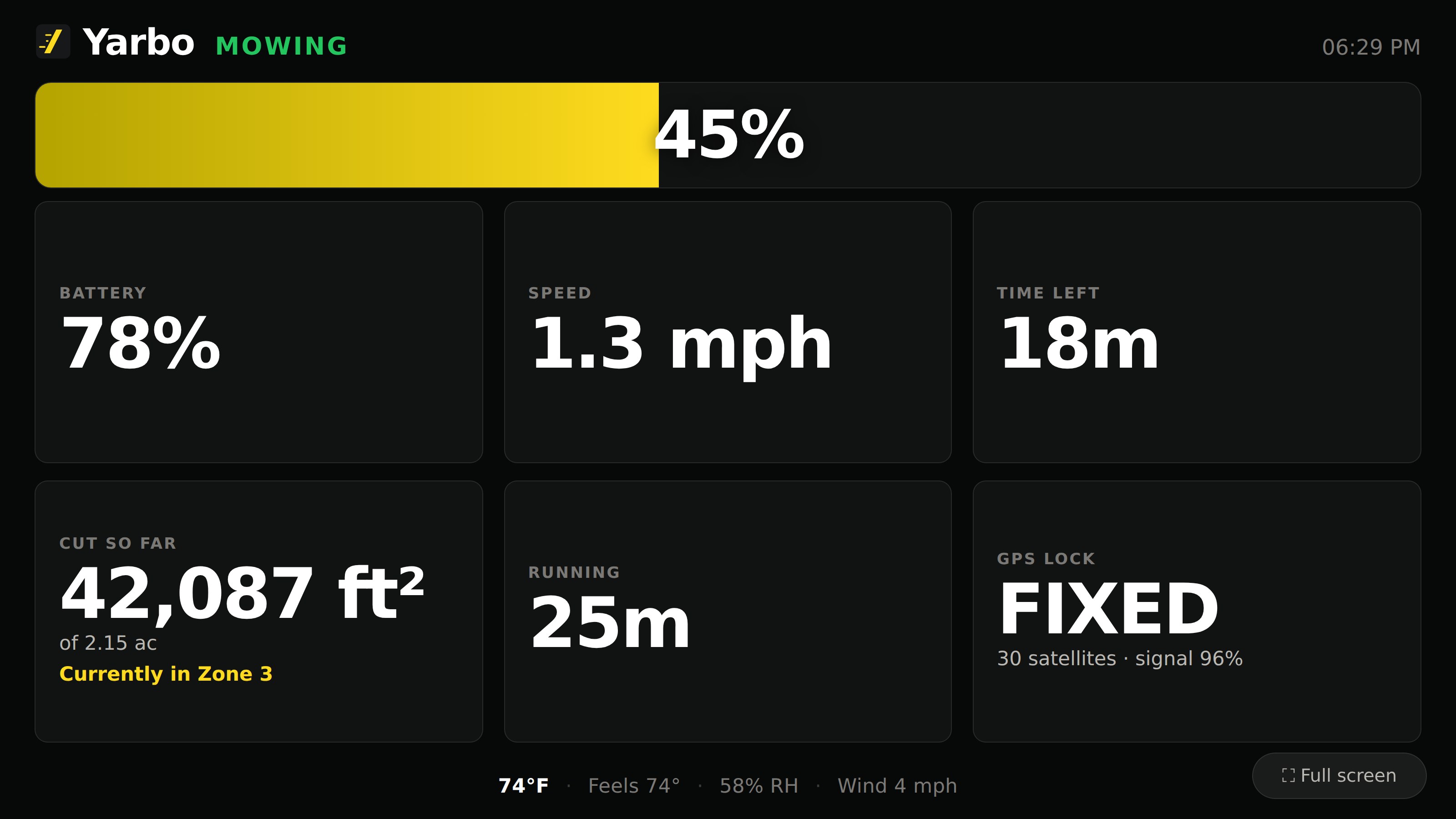
Yes. Yardstick can feed your robot’s live status, battery, position and alerts into Home Assistant, so you can put it on a dashboard or build automations around it: pause on rain, get a notification when a job finishes, whatever you like. The data is yours to use however you want.
Where does my data go?
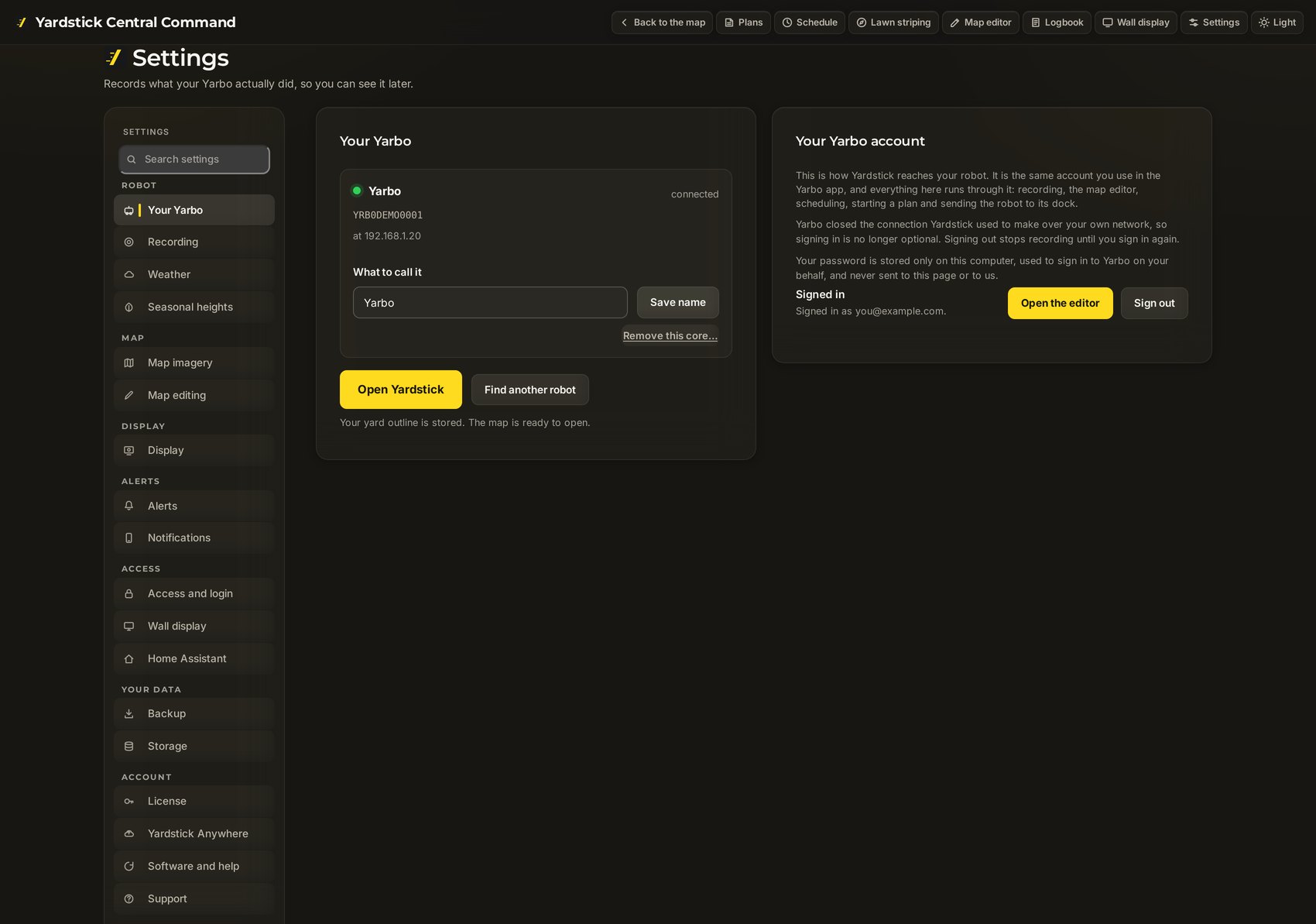
Nowhere. Yardstick records to a database on your own machine and shows it in your own browser. Your coordinates, your map, your recordings and the names you gave your areas are never uploaded to us, and there is no Yardstick account to create. You sign in with the Yarbo account you already have, and those credentials stay on your own computer.
Which robots does it work with?
A Yarbo 2024 or newer Core, with any of its modules: mower, snow blower, leaf blower or SAM. Yardstick reads the robot’s own telemetry, so it records and maps whatever attachment is on. You also need a Yarbo Data Center, the base station that comes with the robot.
What do I need to run it?
A computer running Windows, Mac or Linux. Something always-on (a mini-PC, a spare laptop, a Raspberry Pi) is ideal, since it records while the robot works.
Can I try it, and what does it cost?
Yes, a full 14-day trial, every feature, no credit card. After that it is one simple price, $34.95 a year, with everything included: no tiers, no add-ons, and free updates while your license is active. Cancel any time.
How do I cancel, or change my card?
Yes, from Stripe's own billing page at yardstickhome.com/manage. Enter the email address you paid with and Stripe emails you a sign-in link, so there is no password and you do not need Yardstick installed. That means it still works if the computer is gone. Canceling takes effect at the end of the period you have already paid for, so you keep what you bought, and nothing is deleted: your recordings stay on your own disk.